I think the best piece of character design advice I ever received was actually from a band leadership camp I attended in june of 2017.
the speaker there gave lots of advice for leaders—obviously, it was a leadership camp—but his saying about personality flaws struck me as useful for writers too.
he said to us all “your curses are your blessings and your blessings are your curses” and went on to explain how because he was such a great speaker, it made him a terrible listener. he could give speeches for hours on end and inspire thousands of people, but as soon as someone wanted to talk to him one on one or vent to him, he struggled with it.
he had us write down our greatest weakness and relate it to our biggest strength (mine being that I am far too emotional, but I’m gentle with others because I can understand their emotions), and the whole time people are sharing theirs, my mind was running wild with all my characters and their flaws.
previously, I had added flaws as an after thought, as in “this character seems too perfect. how can I make them not-like-that?” but that’s not how people or personalities work. for every human alive, their flaws and their strengths are directly related to each other. you can’t have one without the other.
is your character strong-willed? that can easily turn into stubbornness. is your character compassionate? maybe they give too many chances. are they loyal? then they’ll destroy the world for the people they love.
it works the other way around too: maybe your villain only hates the protagonist’s people because they love their own and just have a twisted sense of how to protect them. maybe your antagonist is arrogant, but they’ll be confident in everything they do.
tl;dr “your curses are your blessings, and your blessings are your curses” there is no such thing as a character flaw, just a strength that has been stretched too far.
This is such a fabulous flip side of what I’ve always known about villians. That their biggest weakness is that they always assume their own motivations are the motives of others.
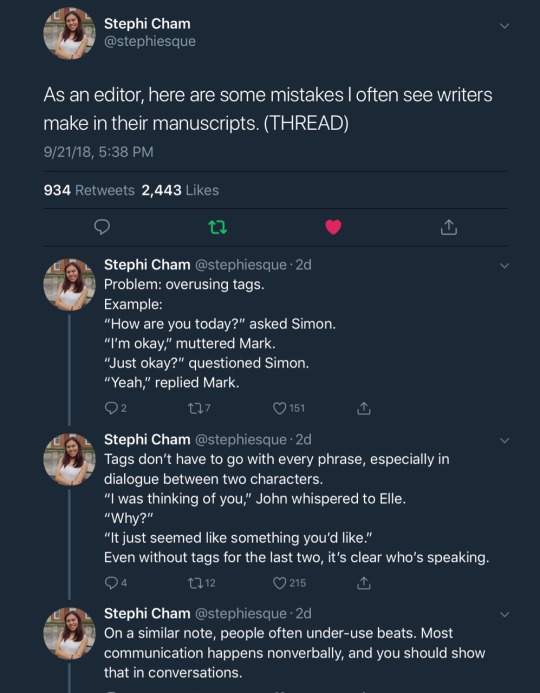
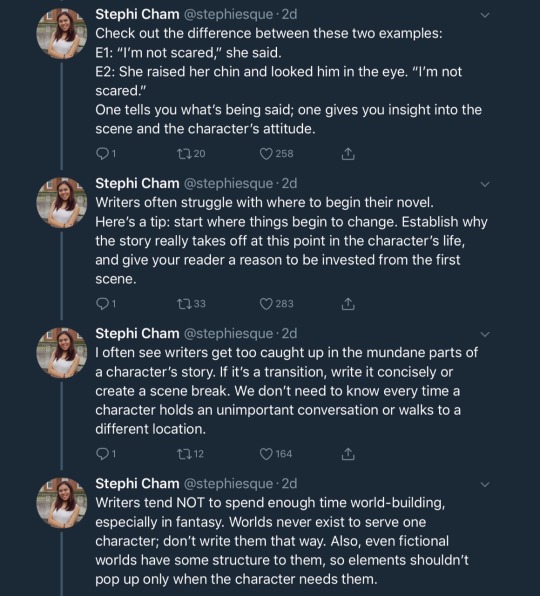
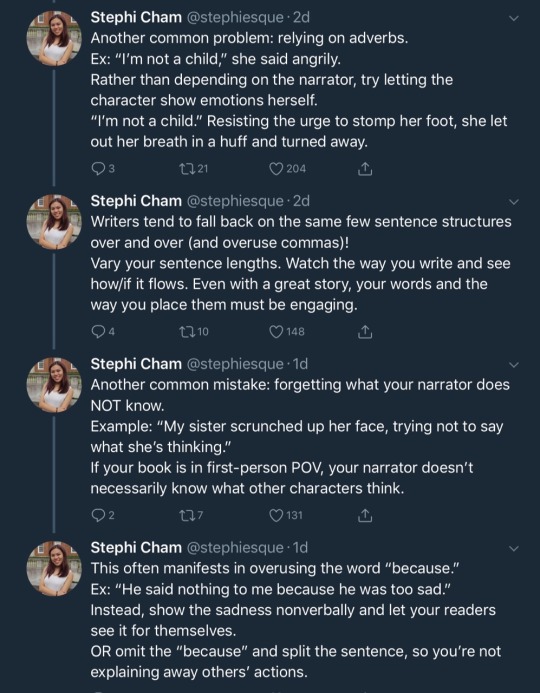
This. This is good fiction writing advice. I really appreciate how it was formatted as “this is a common problem, here is a solution to try in your own work” and not “oh god, don’t do that!” without any extra help. And I extra appreciated the “don’t rely on adverbs” bit, because they do have their place but they aren’t the only way actions can be emphasized.
The villain wants love and validation, and believes others owe it to them. They’ll frequently get enraged and violent when the objects of their affection deny them.
Examples: Tighten from Megamind, Severus Snape from Harry Potter, Frollo from The Hunchback of Notre Dame, Ross from Friends.
The hero will do whatever it takes to protect their family, while abiding by a code of underlying morals that they will not violate.
Examples: Dean Winchester from Supernatural, Joyce Byers from Stranger Things, Marlon from Finding Nemo, the man and the boy from The Road.
The villain:
The villain will do whatever it takes to protect their family, including taking away their freedom, abusing them, or hurting and killing other innocent families.
The hero was raised in an abusive, violent environment. They’ll do whatever it takes to never have to experience that again, and to make sure others never have to suffer in the same way.
Examples: Finn and Rey from Star Wars, Katniss from Hunger Games.
The villain was raised in an abusive, violent environment. They’ll do whatever it takes to never experience that again, including doing the exact same thing to other people.
Examples: That one dude from A Series of Unfortunate Events, Severus Snape (again.)
The villain wants a remedy for injustice, and goes about it by hurting innocents to get an audience or power.
Examples: Killmonger from Black Panther, Magneto from X-Men.
The realization that evil or destructive people are human, and, essentially, want the same things as good people, is a realization that makes them easier to write in an identifiable way.


 RandomFandom