Castle of Adelebsen, district of Göttingen, Lower Saxony
The town of Adelebsen was first mentioned in 990. The oldest surviving part of the castle is the tower, which was built in two phases: The first three levels were built between 1370 and 1380, the upper seven levels, of which six are preserved, were built between 1420 to 1440.
The castle was severely damaged in the Thirty Year War, but partially rebuilt from 1650 onwards.
Family von Adelebsen owned the castle from the early 13th century until 1957, when the last male member of the family, Georg Freiherr von Adelebsen, died without a legitimate heir. He established a foundation in 1947 with the purpose to preserve the castle as cultural heritage and transferred the ownership to the foundation. The foundation is currently led by a great-grandson of the last von Adelebsen.
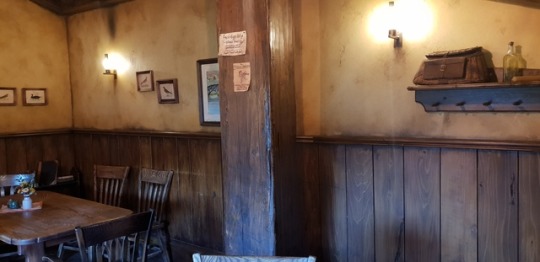
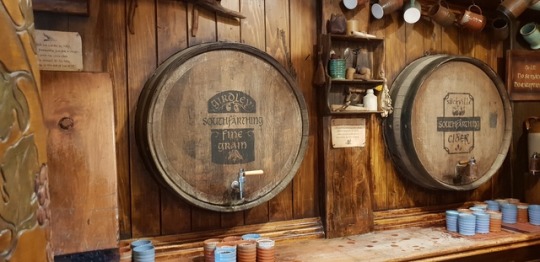
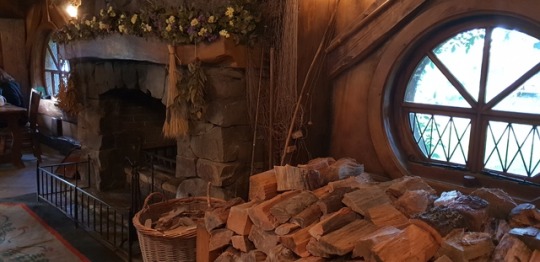
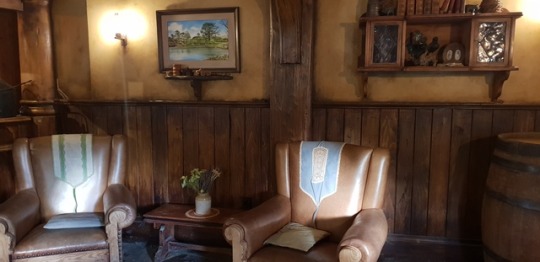
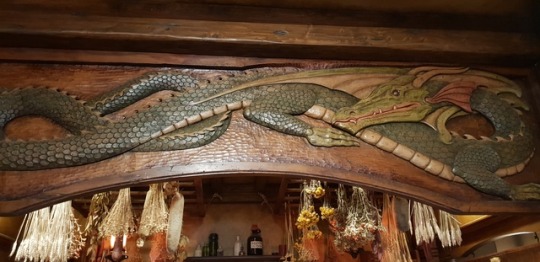
The Green Dragon, Hobbiton, Matamata, New Zealand 2018
Please tell me there’s an actual restaurant in there
There is… and everyone get’s one drink for free
Also these days you can actually EAT in there if you go when they have a night-time banquet and tour, and…get ready for it…you can have YOUR WEDDING RECEPTION in there (after getting married in Hobbiton).
I designed Abhorsen’s house from the book ‘Sabriel’ by Garth Nix
The house sits on an island overhanging a waterfall
(I only designed half of the island, beyond the arches would be green screened)
Built from 1857 to 1866 for the King of Hannover, who never lived here due to the annexation of the Kingdom of Hannover by Prussia in 1866. After the palace stood empty for 10 years, its interior was redesigned to host the Royal Technical College of Hannover. Today, it is the main building of the Gottfried Wilhelm LeibnizUniversity of Hannover.
Castles in Germany are straight out of a fairy tale. Often found sitting atop high mountain peaks with turrets reaching to the sky, they boast a rich history in both their glory and their ruin. Many of these castles have experienced architectural hardship over the centuries—from revolts to wars to even lightning. The majority have since been restored to their former glory. Some of them even remain in the royal families they were built by!
Special note: Technically, there is a difference between a “Schloss” and a “Burg”. A Burg is a fortress or a castle designed for defense in battle, whereas a Schloss is a palace designed as a residence.
Hohenzollern Castle
This hilltop behemoth was built in 1267 by the Prussian Royal family. It was completely destroyed in 1423 but was eventually rebuilt. It has served as everything from a refuge for Catholics during the 30 Years’ War to a family home.
Amazingly, the same family owns and lives in it today. The Prince of Prussia and his wife keep their castle open to the public and the Prussian flag proudly flies from it.
Burg Frankenstein
Though standing in partial ruin, Burg Frankenstein in Darmstadt was originally built by Lord Conrad II Reinz in 1250. It is well worth a visit for its having inspired Mary Shelley’s famous book Frankenstein, published in 1818. Born in the castle in 1673, Johann Conrad Dippel was an alchemist who set up a lab in the castle and produced animal oils which he advertised as an elixir of life. Supposedly, Shelley heard of the lore while cruising up in Rhine in 1814.
Schwerin Castle
Sitting on an island in the middle of Germany’s third largest lake, Schweriner Castle is nicknamed the “Neuschwanstein of the North” and has an astounding 653 rooms. Like most castles, it has a long history of changing hands and repairs but it’s on the docket for becoming a World Heritage Site.
Burg Eltz
It’s incredibly difficult for a building to withstand weather, wars, and revolt over centuries but Burg Eltz is the exception! This medieval fairy-tale-like castle has been in the hands of a single family for over 33 generations. An engraving of it was even used from 1965 to 1992 on the German 500 Deutsche Mark note. It’s hard to access though—hidden in the lush hills above the Moselle River and only accessible via hike or taxi.
Charlottenburg Palace
The largest in Berlin and originally named Lietzenburg Palace, this baroque palace was commissioned by Sophie Charlotte, the wife of Duke of Prussia Friedrich III, with the inauguration of the palace falling on Friedrich’s 42nd birthday. When Sophie Charlotte died in 1705 at the age of 36, Friedrich named the palace and its estate Charlottenburg in her memory. Queen Louise, too, has lived here and is buried with her husband Friedrich Wilhelm III and her son in the mausoleum.
Heidelberg Castle
Heidelberg Castle has a history as old as Heidelberg itself. The first parts of this breath-taking Schloss were built around 1300, with it only gaining regal recognition when Prince Elector Ruprecht III inhabited it. The castle is made up of several separate buildings all surrounding a large courtyard. Though it once stood as a masterpiece on the hill, it has never been completely rebuilt after first suffering, of all things, a lightning bolt strike to its upper castle in the 1500’s and war and fires later on. Still, the ruins attract local and international visitors alike throughout the year and is now even a popular wedding destination.
Lichtenstein Castle
Just a day trip from Stuttgart, Lichtenstein is known as the fairytale castle of Baden-Württemberg. The original castle dated back to 1200 but was destroyed twice and finally fell into ruins. The rebuilt version from the 19th century was inspired by the 1826 novel Lichtenstein by Wilhelm Hauff and sits on a cliff in the Swabian Alps and overlooks picturesque rolling hills. The castle up until today is decked out with fantastic historic artwork, stained glass, and armory.
Burghausen
This castle may not be the prettiest but it IS the longest—a fact confirmed by a Guiness World Record. Located in Upper Bavaria, this castle was the second residence of the dukes of Lower Bavaria. It was created in gothic style and is made up of a main castle, inner courtyard and five outer courtyards. Burghausen is best admired in a panoramic view as to conceptualize its length of 3,448 feet.
Schloss Nordkirchen
It isn’t quite a moat but a canal is pretty close! Schloss Nordkirchen , located in North Rhine Westphalia, was built in the 18th century and calls itself the “Versailles of Germany”. It was originally one of the residences of Prince-Bishopric of Münster.
Neuschwanstein
It would not be a list of German castles without this undeniable Bavarian favorite. King of Bavaria Ludwig II built the castle in order to withdraw from public life after losing his title post-Austro-Prussian War. Construction began in 1868 and took quite a long time to finish—so long in fact, that Ludwig never saw the final version which was finished in 1892.
So beautiful was this final castle that Disney took notice and based Cinderella’s castle off of it! It now attracts over 6,000 visitors a day in summer.




 RandomFandom